Separating Soil Truth from Soil Hype: A Wisconsin Farmer's Guide to What Actually Works
Photo: Wisconsin farmer examining soil cover crops no-till field research, via ontheworldmap.com
If you've spent any time at a farm conference, scrolled through an ag social media feed, or sat through a cover crop sales pitch in the last five years, you've heard the gospel of regenerative agriculture preached with real conviction. No-till will transform your soil. Cover crops will fix everything. Compost will make your land practically farm itself.
Some of that is genuinely true. Some of it is wishful thinking dressed up in science-adjacent language. And some of it — let's be honest — is marketing copy that happens to be wearing overalls.
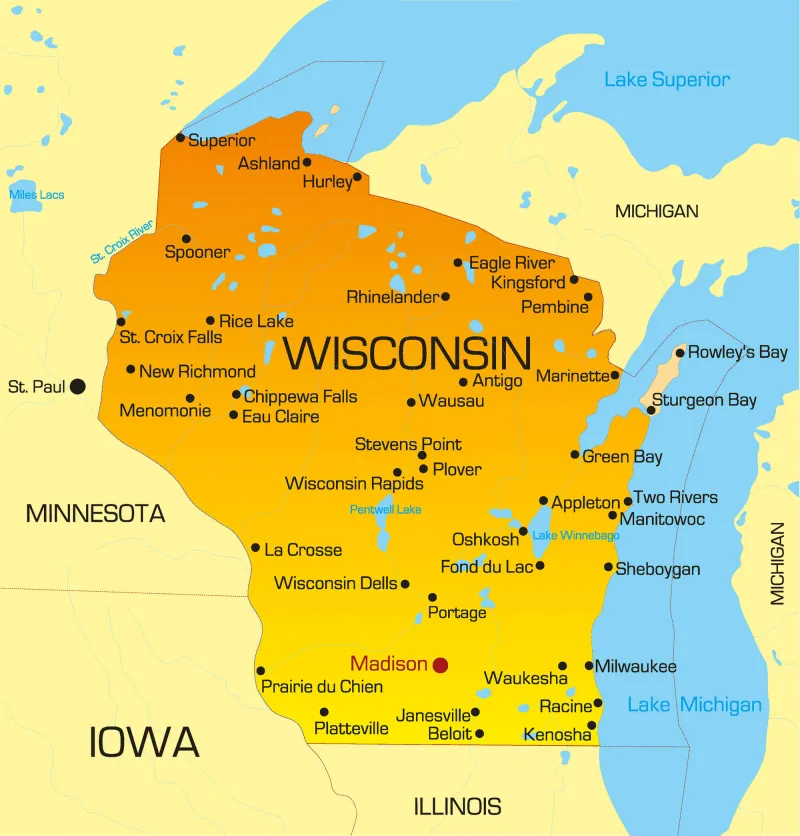
Wisconsin's soils are specific. Our climate is specific. What works on a dryland wheat farm in Kansas or a pasture in New Zealand doesn't automatically translate to a corn-soybean rotation in Grant County or a vegetable operation in Dane County. So let's do something radical: look at what Wisconsin soil science actually says.
The No-Till Promise — Real, But Complicated
No-till farming has some of the strongest evidence behind it of any practice in the regenerative toolkit. The data on reduced erosion is essentially uncontested. Tilled fields in Wisconsin's hilly Driftless Area can lose anywhere from 5 to over 20 tons of topsoil per acre annually during heavy rain events. No-till dramatically reduces that number, and that's not a small thing — topsoil loss is permanent on any human timescale.
Where the no-till narrative gets more complicated is soil carbon. The claim you'll often hear is that no-till builds soil organic matter and sequesters carbon. This is partially true, but the full picture is more nuanced. Research published in journals like Soil & Tillage Research and studies from the University of Wisconsin have found that no-till does tend to concentrate organic matter in the top few inches of soil — but when you measure the entire soil profile, the differences in total carbon between tilled and no-till systems often shrink considerably.
That doesn't mean no-till isn't worth doing. It absolutely is, especially for erosion control, fuel savings, and improving surface soil biology. But if someone is promising you that no-till alone will dramatically sequester carbon and offset your farm's emissions, that claim deserves a raised eyebrow and a request for the data.
Another honest caveat: transitioning to no-till in Wisconsin's heavier clay soils — particularly in the northern and eastern parts of the state — can create compaction challenges and drainage issues that take years to work through. Farmers who've made the switch successfully often describe a difficult three-to-five-year transition period. That's real, and anyone who tells you otherwise probably isn't farming clay.
Cover Crops: The Evidence Is Strong, With Asterisks
Cover crops are probably the practice with the broadest and most consistent evidence base in regenerative agriculture, and Wisconsin has some compelling local data to back it up. Research from the Michael Fields Agricultural Institute and UW-Madison has documented measurable improvements in soil biological activity, reduced compaction, and improved water infiltration in fields with consistent cover crop histories.
Cereal rye in particular has become a workhorse for Wisconsin farmers. It establishes reliably in our climate, overwinters well, and provides serious erosion protection during the vulnerable fall and early spring window. It's not hype — it's a tool that genuinely performs.
But here's where the asterisks come in.
The nitrogen credit from legume cover crops is real but frequently overstated in extension literature and almost always overstated in seed company marketing. Hairy vetch can fix meaningful nitrogen — somewhere in the range of 60 to 150 pounds per acre under ideal conditions — but "ideal conditions" is doing a lot of work in that sentence. Cool, wet springs, poor termination timing, or a mismatch between nitrogen release and crop uptake can cut that benefit dramatically. Treating legume covers as a full nitrogen replacement without soil testing to verify is a gamble.
The other honest conversation about cover crops in Wisconsin is economics. Seed, termination, and management costs add up, and for farms on tight margins, the return-on-investment timeline can stretch longer than lenders or landlords are comfortable with. The agronomic benefits are real — but so are the costs, and pretending otherwise doesn't serve farmers.
Compost: Genuinely Valuable, Genuinely Misunderstood
Compost gets held up as a near-miraculous soil amendment in regenerative circles, and the underlying science does support its benefits — improved soil structure, enhanced microbial diversity, slow-release nutrient availability. For vegetable operations and high-value crop systems, compost is often a clear economic winner.
For row crop farmers in Wisconsin, the math is harder. Quality compost applied at agronomically meaningful rates — typically 2 to 5 tons per acre — can run $50 to $150 per acre or more, depending on your source and hauling distance. The nutrient value recovered in the first year rarely covers that cost. The long-term soil health benefits are real, but they accrue slowly, and they're difficult to capture in a single-season profit-and-loss statement.
What's often glossed over in the compost conversation is variability. Compost quality varies enormously depending on source materials, composting process, and maturity. Applying immature compost can actually tie up nitrogen rather than release it. Getting a compost analysis before you apply isn't optional — it's essential.
What Wisconsin Soil Science Is Actually Excited About
Here's the thing: the researchers and agronomists doing serious soil work in Wisconsin aren't dismissing regenerative practices. They're refining them. The most promising work happening right now involves systems thinking — how combinations of practices interact over time — rather than any single silver-bullet approach.
Integrating livestock into crop rotations, for example, is showing genuine promise for accelerating soil organic matter gains in ways that no-till or cover crops alone don't achieve. Research from Wisconsin farms participating in long-term monitoring programs suggests that farms using diverse rotations — including small grains and perennials — show more consistent soil health improvements than those relying solely on corn-soybean systems with cover crops bolted on.
Soil biology is also an area where the science is genuinely exciting and genuinely unsettled. We know that practices like reduced tillage and diverse cover crop mixes support more complex microbial communities. What we don't yet fully understand is how to translate that biological complexity into predictable agronomic outcomes. Anyone who tells you they have that figured out is getting ahead of the data.
The Bottom Line for Wisconsin Farmers
Regenerative agriculture isn't a scam — but it's also not a religion. The practices at its core have real scientific support, real limitations, and real tradeoffs that depend heavily on your specific soils, climate, and operation.
The most useful thing you can do as a Wisconsin farmer is approach these tools the way you'd approach any other input decision: with curiosity, skepticism, and a commitment to measuring what actually happens on your land. Soil test before and after. Track your yield data. Give practices time to work, but also give yourself permission to change course if the evidence on your farm doesn't support the promise.
The soil science is on your side. The hype is not always.
Ask hard questions. Trust your data. And don't buy the cover crop seed until you've talked to someone who's grown it in your county.