Before You Sign That Carbon Contract: What Wisconsin Farmers Must Know About How Credits Are Measured and Monetized

Let's be honest: when someone tells a Wisconsin farmer they can get paid for what's already happening in their soil, it sounds almost too good to be true. And sometimes — depending on who's doing the measuring and who's writing the contract — it kind of is.
Carbon markets have exploded in the last few years. Platforms like Indigo Ag, Nori, Regen Network, and a handful of others are actively recruiting farmers across the Midwest, promising per-ton payouts for sequestering carbon dioxide in agricultural soils. The pitch is clean and compelling: adopt regenerative practices, store more carbon, get paid. Simple, right?
Not quite. The methodology behind how that carbon gets counted is where things get complicated — and where a lot of farmers are getting caught flat-footed.
What Even Is a Soil Carbon Credit?
At its most basic level, one carbon credit represents one metric ton of CO₂ (or its equivalent) that has been removed from the atmosphere and stored somewhere stable — in this case, your soil. Buyers on the voluntary carbon market — corporations trying to offset their emissions — purchase these credits to meet sustainability goals or regulatory requirements.
The idea that healthy soil can store massive amounts of carbon isn't hype. It's real science. When you build organic matter through cover cropping, reduced tillage, or compost application, you're genuinely pulling carbon out of the air and locking it underground. Wisconsin soils, particularly in the southwest and central regions, have real sequestration potential that's been underutilized for decades.
But here's the catch: the credit is only as good as the measurement behind it.
The Measurement Problem Nobody Talks About at the Sales Pitch
There are currently two main approaches to measuring soil carbon: direct soil sampling and modeled estimation.
Direct sampling means someone actually comes to your farm, pulls cores from multiple locations across your fields, and sends them to a lab for analysis. It's the gold standard for accuracy, but it's also expensive, time-consuming, and highly sensitive to where exactly those cores are pulled. Soil carbon can vary dramatically across a single field — sometimes within just a few meters — which means sampling design matters enormously.
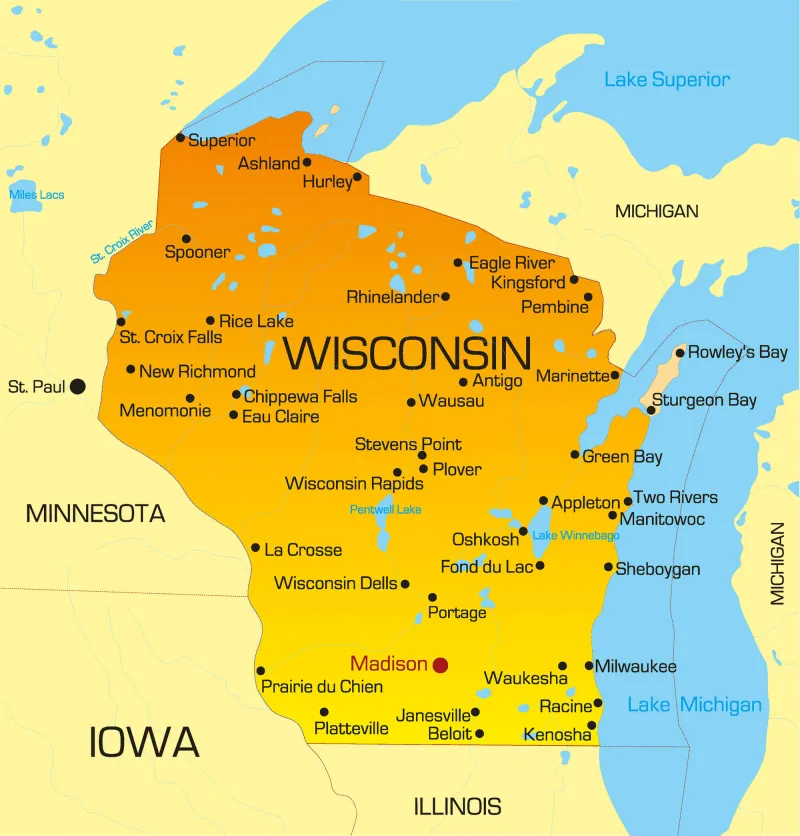
Modeled estimation, on the other hand, uses algorithms and historical data to predict how much carbon your practices are likely to have sequestered. It's cheaper and faster, but it's also an estimate. Models like COMET-Farm or the DayCent model are widely used, and they're reasonably solid tools — but they're built on averages, and your farm isn't average. Wisconsin's soil diversity alone, from the sandy loams in the central sands region to the heavy clay soils near Lake Michigan, can make model outputs swing significantly from reality.
Many carbon platforms use a hybrid approach: some sampling, some modeling. What you need to ask — before you sign anything — is exactly which methodology they're using, how many sample points they're pulling per acre, and who's paying for that sampling. In some contracts, the cost of verification comes out of your credit revenue. That can eat into your payout more than you'd expect.
Additionality, Permanence, and the Fine Print That Actually Matters
Two concepts are central to how carbon credits get valued, and both of them have real implications for Wisconsin farmers: additionality and permanence.
Additionality means the carbon you're sequestering has to be additional — beyond what would have happened anyway without the program. If you've been no-tilling for fifteen years, some platforms won't credit you for that existing practice because it's already your baseline. You'd only get paid for new changes. For long-time conservation farmers, this can be genuinely frustrating. You've already done the work, but the market may not reward it.
Permanence refers to how long that carbon has to stay in the ground. Most programs require some kind of commitment — often 10 years or more — that you'll maintain the practices that generated the credits. If you break that commitment (say, you need to till a field for drainage repair, or you sell the farm), you could face what's called a reversal penalty. Some contracts handle this through a buffer pool; others come back directly to you. Read. Every. Word.
What Are the Credits Actually Worth?
Prices in the voluntary carbon market have been all over the place. In recent years, agricultural soil carbon credits have traded anywhere from $10 to $50 per metric ton, with some premium markets pushing higher. But averages can be misleading.
Sequestration rates on Midwest cropland typically run somewhere between 0.1 and 0.5 metric tons of carbon per acre per year, depending on practices and starting soil conditions. At $20 per ton, that's $2 to $10 per acre annually. For a 500-acre operation, you might be looking at $1,000 to $5,000 per year — real money, but maybe not the windfall some marketing materials imply.
And that's before platform fees, sampling costs, and any revenue share arrangements the program takes off the top. Some platforms take 25–40% of credit revenue as their cut. Others operate on a flat fee structure. The math looks different depending on which door you walk through.
Questions to Ask Before You Commit
If a carbon market representative is sitting across the table from you — virtual or otherwise — here's what you should be pressing them on:
- Who conducts and pays for the soil sampling? And how many samples per acre?
- What measurement methodology is used? Direct sampling, modeling, or a hybrid?
- What's the contract length and what are the reversal penalties?
- Does the program recognize existing conservation practices, or only new ones?
- What percentage of credit revenue goes to you versus the platform?
- Is the program verified by a third-party standard like Verra, Gold Standard, or the American Carbon Registry?
- What happens to the contract if you sell your farm?
Third-party verification is worth emphasizing. Programs that operate under established standards are generally more credible — both to buyers and to farmers — than proprietary platforms that are essentially grading their own homework.
The Bigger Picture for Wisconsin Soil Health
Here's what we believe at Soil Sisters WI: carbon markets, done right, can be a genuine tool for accelerating the transition to healthier, more resilient farming systems. Getting paid to build organic matter, reduce erosion, and improve water infiltration? That aligns beautifully with everything we know about good soil stewardship.
But the market is young, the standards are still evolving, and not every program out there has farmer interests at heart. Some are far more interested in generating cheap credits for corporate greenwashing than in actually improving soil health on Wisconsin farms.
The farmers who will come out ahead are the ones who treat this like any other business contract — skeptically, carefully, and with good legal and agronomic advice before signing. Talk to your county UW-Extension office. Connect with the Wisconsin Farmers Union. Get an independent agronomist to review the methodology.
Your soil has real value. Make sure you're the one who benefits from it.