Good Intentions, Dirty Water: The Surprising Link Between Soil-Building Practices and Nitrate Pollution in Wisconsin
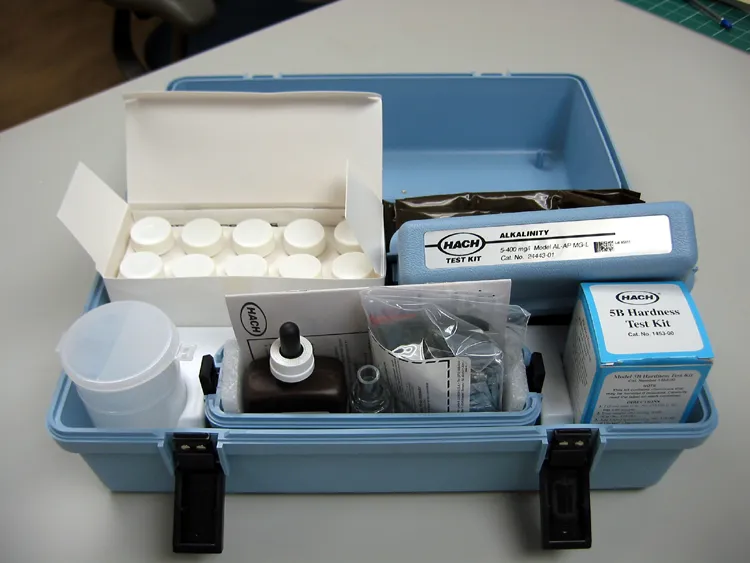
Photo: Staff photographer, CC BY-SA 3.0, via Wikimedia Commons
Let's be honest — nobody gets into regenerative agriculture hoping to contaminate a well. You're adding cover crops, timing your manure applications, building organic matter. You're doing the right things. So it can feel like a gut punch when the science tells you that some of those same practices, under the wrong conditions, can send nitrates cascading straight through your soil profile and into the groundwater below.
This isn't a reason to abandon soil health principles. Not even close. But it is a reason to get serious about the nitrogen cycle in a way that most soil health conversations don't bother to address. Because in Wisconsin — where nearly 1.7 million people rely on private wells and where nitrate contamination already exceeds safe drinking water limits in parts of the Central Sands region — the stakes are too high for oversimplified advice.
Nitrogen Doesn't Wait for Your Permission
Here's the thing about nitrogen: it doesn't care about your intentions. Once it converts to nitrate form in your soil, it becomes highly mobile. Nitrate carries a negative charge, which means it repels the negatively charged surfaces of soil particles instead of binding to them. Water moves through your soil, and nitrate goes right along for the ride — downward, toward tile drains, toward groundwater, toward the aquifer feeding someone's kitchen tap.
The nitrogen cycle involves several transformation steps — mineralization, nitrification, denitrification — and the timing of each step matters enormously. When organic nitrogen sources like manure or decomposing cover crop residue break down, they release ammonium, which soil bacteria then convert to nitrate. If that conversion happens faster than your cash crop can absorb the nitrogen — or worse, if it happens in a window when no crop is growing at all — you've got a leaching problem waiting to happen.
The Cover Crop Paradox
Cover crops are one of the most celebrated tools in the soil health toolkit, and for good reason. They protect against erosion, feed soil biology, and can capture residual nitrogen left in the profile after harvest. But here's where it gets complicated.
Certain cover crop species, particularly legumes like hairy vetch or crimson clover, fix atmospheric nitrogen and add it to your system. That's a feature, not a bug — except when the termination timing is off. If you terminate a legume-heavy cover crop mix too early in spring, or if a wet spring delays cash crop planting, that decomposing biomass starts releasing nitrogen before your corn or soybeans are in the ground and hungry for it. The result? A flush of nitrate with nowhere to go but down.
Even non-legume covers can contribute to the problem if their carbon-to-nitrogen ratio is low enough to mineralize quickly. Winter rye, often praised for its soil-building and weed-suppressing properties, has a high C:N ratio and tends to tie up nitrogen as it breaks down — a good thing for slowing leaching. But a lush stand of radishes or mustard? That residue breaks down fast, and if your timing isn't dialed in, you may be feeding your groundwater more than your crop.
Manure: The Double-Edged Shovel
Manure applications are another area where the gap between intention and outcome can be significant. Manure is a genuine asset — it delivers organic matter, microbial food, and a suite of nutrients that synthetic fertilizers can't replicate. But the nitrogen in manure, particularly in liquid dairy and hog manure, can mineralize rapidly under the right temperature and moisture conditions.
Wisconsin's nutrient management rules set guidelines for application timing, but fall applications — still common practice on many farms — carry real risk. Soil microbes slow down in cold weather, which means nitrogen from a fall manure application can sit in the profile over winter and then mineralize in early spring, right before or during snowmelt, when there's nothing in the ground to take it up. Add a wet spring, and that nitrate has a clear path to tile drains and eventually to groundwater.
The Wisconsin Department of Agriculture, Trade and Consumer Protection (DATCP) has flagged elevated nitrate levels in private wells across multiple counties, with the Central Sands — a region of sandy, highly permeable soils — showing some of the most persistent contamination. This isn't a coincidence. Sandy soils offer very little resistance to downward water movement, making leaching almost inevitable when nitrogen management isn't precise.
Timing Is Everything (And So Is Soil Type)
The good news is that the same science that explains the problem also points toward the solutions. Nitrogen management isn't one-size-fits-all, and neither is leaching risk. Your soil texture, drainage class, organic matter levels, and the specific crops and amendments you're using all interact to determine how much nitrogen moves through your profile and how fast.
Here are some practical starting points:
Audit your cover crop termination timing. Aim to terminate legume-heavy mixes close to cash crop planting — within two to three weeks — to synchronize nitrogen release with crop uptake. In Wisconsin, that often means waiting until late April or early May, even when the urge to get in the field hits earlier.
Match your manure application window to your soil. On heavier clay soils with slower drainage, fall applications carry less immediate leaching risk than on sandy soils. On the Central Sands or similar landscapes, spring applications — even if logistically inconvenient — are worth the extra planning.
Use soil temperature data. Nitrogen mineralization kicks into gear when soil temperatures exceed 50°F at four inches deep. Wisconsin's soil temperature data is publicly available through the UW-Madison extension network. Watching those numbers can help you anticipate when your organic nitrogen sources are going to start releasing — and whether your crop will be ready to catch what's released.
Consider nitrification inhibitors for liquid manure. Products like nitrapyrin slow the bacterial conversion of ammonium to nitrate, buying time for crops to establish and take up nitrogen before it becomes mobile. They're not a silver bullet, but they're a useful tool in high-risk situations.
Test your soil and your water. If you're farming over sandy soils or in a region with documented groundwater contamination, consider testing a private well annually for nitrates. It's inexpensive, it's informative, and it gives you real data to work with instead of assumptions.
Holding Two Truths at Once
Soil health and water quality aren't fundamentally at odds — but they do require us to hold two truths at once. Building organic matter and feeding soil biology are genuinely important. So is protecting the aquifers that families across Wisconsin depend on for drinking water.
The farmers who navigate this best aren't the ones who abandon soil health practices out of fear, or the ones who charge ahead without accounting for nitrogen dynamics. They're the ones who get curious about the science, ask hard questions about their specific landscape, and stay willing to adjust their timing and their tools as they learn more.
That's the kind of farming that actually moves the needle — for your soil, for your yields, and for the water running beneath all of it.