Stop Chasing Numbers: The Real Reason Your Soil pH Won't Stay Put — and What to Do About It
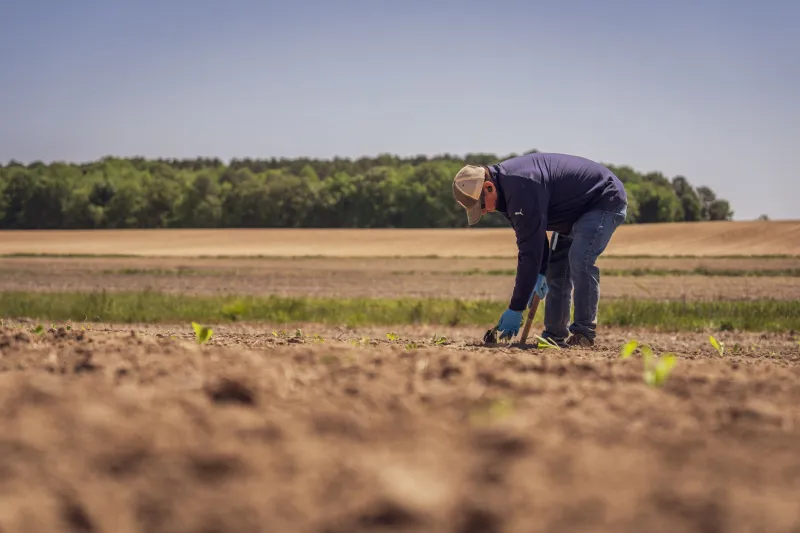
You did everything right. You limed in the fall, waited for spring, pulled a soil sample, and got a reading you were actually proud of. Then the season turned, the rain came, the crops went in, and somehow — somehow — that number slipped away from you again.
If this feels like a treadmill you can't get off, you're not imagining it. Soil pH instability is one of the most frustrating and least-discussed problems facing Wisconsin farmers today. And the standard advice — just add more lime — is only treating the symptom while ignoring what's actually driving the rollercoaster.
Let's talk about what's really going on underground.
Why pH Moves in the First Place
Soil pH isn't a static property. It's a dynamic expression of ongoing chemical reactions, biological activity, and physical processes all happening simultaneously. In Wisconsin, we're dealing with a particularly complicated mix of factors that make pH management harder than it is in many other parts of the country.
First, there's rainfall. Wisconsin receives an average of 30 to 34 inches of precipitation annually, and that water doesn't just sit on the surface. As it moves through the soil profile, it carries positively charged calcium and magnesium ions — the ones responsible for keeping pH elevated — down and out of the root zone. This leaching process is slow but relentless, and in sandier soils across the central sands region, it happens even faster.
Then there's biology. Soil microorganisms are constantly producing carbon dioxide as they decompose organic matter. That CO₂ dissolves in soil water to form carbonic acid. More microbial activity — which is generally a good thing — means more acid production. This is one reason pH tends to dip in summer when soils are warm and biological activity peaks.
Crop uptake adds another layer. Plants absorb nutrients through ion exchange, and the type of ions they release back into the soil matters. Legumes, for example, tend to acidify the soil around their roots as they fix nitrogen. Corn and small grains pull heavily on nitrogen, and as that nitrogen cycles through, it generates acidity too.
Finally, the amendments we apply — especially nitrogen fertilizers — are often more acidifying than farmers realize. Anhydrous ammonia, urea, and ammonium sulfate all contribute to long-term acidification. The sulfate in ammonium sulfate is particularly aggressive. If you're on a heavy nitrogen program without accounting for the acid load, you're essentially liming to offset your own inputs.
Wisconsin's Soil Types Make It Worse
Not all soils respond to pH shifts the same way, and this is where buffer capacity becomes the concept that changes everything.
Buffer capacity refers to a soil's ability to resist changes in pH. Soils high in clay and organic matter have strong buffer capacity — they can absorb a significant acid load before the pH reading actually drops. Sandier soils with low organic matter have almost no buffering ability, meaning they react quickly and dramatically to any acidifying input or leaching event.
Wisconsin's soils span a wide range. The heavy clays and silty loams in the southwest — think Vernon and Richland counties — have decent natural buffering. But move east toward the lake plain or north toward the sandy outwash soils, and you're dealing with soils that can drop half a pH unit after a single wet season.
This is why a one-size-fits-all liming recommendation is almost always wrong. A rate that's perfectly adequate for a Tama silt loam in Grant County might be completely insufficient for a Plainfield loamy sand in Portage County. If your agronomist or extension office isn't talking about buffer pH alongside active pH, that's a conversation worth starting.
The Timing Problem Nobody Talks About
Most farmers lime in the fall, and there are good reasons for that — fields are accessible, equipment is available, and the lime has time to react before spring planting. But fall application alone may not be your best strategy depending on your soil type and rotation.
Lime reacts slowly. Agricultural limestone typically takes three to six months to fully neutralize soil acidity, and that reaction rate slows dramatically in cold soils. If you're applying lime in November in central Wisconsin, a significant portion of that material isn't doing much until April or May — right when your crops are already in the ground.
Split applications, while less operationally convenient, can be more effective for maintaining stable pH over time. Applying a maintenance rate every two to three years rather than a corrective rate every five keeps the chemistry more consistent. It also reduces the risk of overcorrecting — pushing pH too high — which creates its own set of problems around micronutrient availability.
For fields with low buffer capacity, smaller and more frequent applications are almost always the better approach. Dumping four tons of lime on a sandy field every five years produces wild swings. Applying one and a half tons every two years keeps the system steadier.
What Stabilization Actually Looks Like
Here's the mindset shift: stop trying to hit a target number and start trying to build a stable system.
That means a few things in practice. First, get a buffer pH test done alongside your standard active pH. The Shoemaker-McLean-Pratt (SMP) buffer test is widely used in the Midwest and gives you a much clearer picture of how much lime your soil actually needs to move the needle — versus how much it looks like it needs based on the active reading alone.
Second, pay attention to your organic matter trajectory. Organic matter is one of the primary contributors to buffer capacity. Soils that are building organic matter through cover cropping, reduced tillage, and diverse rotations are also building their own natural pH stability. This isn't a quick fix — organic matter changes slowly — but it's one of the most durable investments you can make in long-term soil health.
Third, audit your nitrogen inputs. If you're applying significant rates of ammonium-based fertilizers, calculate the acid equivalents you're adding annually and factor that into your liming budget. University of Wisconsin Extension has resources that help you estimate acidification rates by fertilizer type and application rate. Using that math takes the guesswork out of maintenance liming.
Finally, consider calcitic versus dolomitic limestone based on your magnesium levels. Dolomitic lime adds both calcium and magnesium, which is great if your soils are magnesium-deficient — common in sandy Wisconsin soils. But if magnesium is already adequate, over-applying dolomitic lime can push the calcium-to-magnesium ratio out of balance and create secondary nutrient problems. Match your amendment to your actual chemistry.
The Bigger Picture
Soil pH is often treated as a simple dial to turn up or down, but it's really more like a barometer for everything else happening in your soil system. Unstable pH is a signal that something in the broader chemistry — inputs, biology, drainage, organic matter — is out of balance.
The farms that manage pH most successfully aren't the ones obsessively testing and reacting. They're the ones who've built soils with enough biological richness and physical structure to buffer the inevitable fluctuations that come with Wisconsin weather and production agriculture.
That's the goal worth chasing. Not a perfect number on a soil test, but a resilient system that doesn't need constant correction to stay in range.
Your soil is capable of that kind of stability. It just needs the right support to get there.