Winter Isn't Waiting: How to Make Wisconsin's Freeze-Thaw Cycles Work For Your Soil Instead of Against It
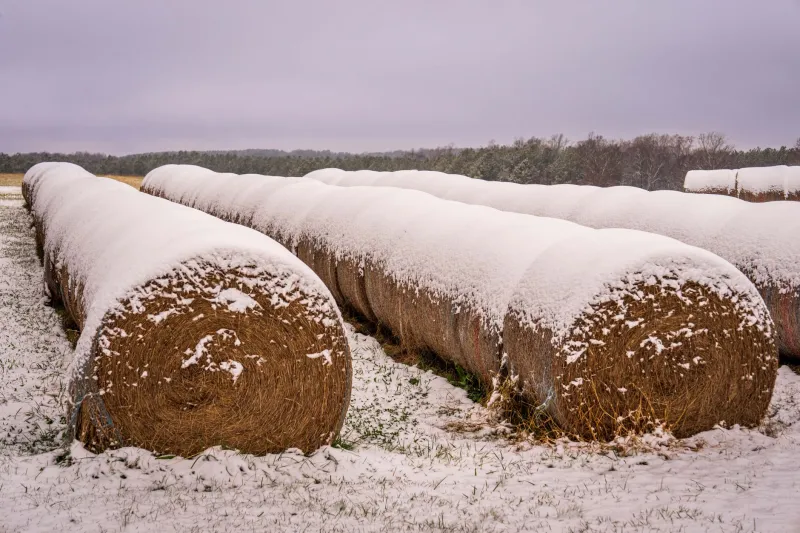
Wisconsin winters get a bad reputation in agriculture. And fair enough — they're brutal, they're long, and they have a way of arriving before you're ready and overstaying their welcome into what should be spring planting season.
But here's something that often gets lost in the seasonal grumbling: winter, specifically the repeated freezing and thawing that characterizes Wisconsin's transitional months, is one of the most powerful soil-structuring forces in our climate. Free of charge. No equipment required. The question isn't whether it's going to happen. The question is whether your soil is positioned to benefit from it — or whether it's going to take a beating instead.
The Physics of What's Actually Happening
When water in the soil freezes, it expands. That expansion creates pressure — and in a soil with good pore structure and adequate moisture, that pressure does something useful: it fractures aggregates, opens channels, and loosens compacted zones in ways that mimic (and in some cases surpass) what mechanical tillage achieves.
As temperatures cycle back above freezing, ice lenses melt and the soil settles into a slightly different configuration. Repeat that process dozens of times across a Wisconsin winter, and you get a natural tillage effect that reaches several inches into the soil profile — without the compaction that comes with running a piece of iron across a field.
This is the freeze-thaw dividend. And it's real.
But it comes with conditions. Soils that are bare, crusted, or waterlogged going into winter don't harvest this dividend — they pay a penalty instead. The same physics that opens up well-aggregated soil can destroy the structure of a degraded one.
When Freeze-Thaw Builds — and When It Destroys
The difference between soil that improves over winter and soil that deteriorates comes down to a few key factors: aggregate stability, organic matter content, and surface cover.
Soil aggregates — those crumbly, porous clumps that make good topsoil look and feel like chocolate cake — are held together by a combination of fungal hyphae, bacterial biofilms, root exudates, and organic compounds. Aggregates with strong biological glue can handle the mechanical stress of freeze-thaw cycling. The ice expands in the macro-pores between aggregates, not through them, and the result is improved porosity without structural collapse.
Aggregates that are weak — found in soils with low organic matter, degraded biology, or recent heavy tillage — don't have that resilience. When ice forms inside a fragile aggregate, it shatters it. What comes out the other side of winter is a fine, powdery soil surface that crusts easily, seals against rain infiltration, and erodes readily when snowmelt runs across it.
"I describe it as a stress test," says soil scientist Dr. Priya Nambiar, who has studied soil structural dynamics at UW-Madison. "Winter freeze-thaw is essentially stress-testing your aggregates. Strong ones come out better. Weak ones don't survive it. And whatever state your soil is in going into November is going to be amplified by the time April gets here."
The Role of Surface Cover
Bare soil going into winter is one of the most costly decisions a Wisconsin farmer can make — and it's not just about erosion, though that's real and serious.
Surface residue and living or recently terminated cover crops insulate the soil surface, moderating the speed and depth of freeze events. That moderation matters because it's not just whether soil freezes — it's how fast it freezes that determines the outcome.
Rapid, deep freezing on bare soil can lock in excess moisture and create large, disruptive ice lenses that do real structural damage. Slow, moderated freezing on covered soil tends to produce smaller ice crystals distributed more evenly through the profile — the kind that open pores rather than collapse them.
Cover crops do double duty here. Their living roots continue to exude compounds that feed soil biology and reinforce aggregate bonds right up until hard frost. Their residue protects the surface through winter. And their root channels — even after the plant dies — provide pathways for snowmelt infiltration in spring, reducing runoff and keeping that water in your soil profile where it belongs.
Region-Specific Considerations for Wisconsin
Wisconsin isn't a monolith, and freeze-thaw dynamics play out differently depending on where you farm.
In the northern part of the state — think Ashland, Bayfield, and Iron counties — soils tend to freeze hard and stay frozen for extended periods. The freeze-thaw action is less frequent but more severe. Farms in this zone benefit most from heavy residue cover and deep-rooted cover crops that stabilize the profile before freeze-up.
In central Wisconsin, particularly on the sandier soils of Adams and Waushara counties, freeze-thaw cycling is less of a structural concern — sand doesn't aggregate the same way clay and loam do — but erosion from snowmelt on bare, low-organic-matter sand is a serious issue. Cover is critical here for different reasons.
The Driftless Area and the heavier clay soils of the southeast are where freeze-thaw management really earns its keep. These soils have the clay content to form strong aggregates — but also the clay content to become a smeared, compacted mess if worked wet or left bare. A well-managed freeze-thaw cycle on a Driftless clay-loam with good organic matter and cover crop residue can do more for soil structure in a winter than a season of cover cropping alone.
What to Do in Fall — Before Winter Does It For You
The window for setting your soil up to benefit from Wisconsin winters closes fast. Here's what matters most before the ground freezes:
Get something growing or leave something standing. Living cover crops are ideal. Rolled or standing cash crop residue is better than nothing. Bare soil is the worst outcome.
Avoid late-season tillage on wet soils. Tilling when soils are too wet destroys aggregates right before winter's stress test. If you must till, wait for conditions that are actually fit — and accept that sometimes the right answer is to leave it alone until spring.
Check your drainage. Waterlogged soils freeze poorly and thaw slowly. Fields with drainage problems going into fall will have compounded problems coming out of spring. Fall is the time to identify and flag those areas, even if you can't address them until the following year.
Apply manure or compost thoughtfully. Surface-applied organic matter before freeze-up feeds the biology that builds aggregate stability. But heavy applications on frozen ground can run off with snowmelt — a nutrient loss and a water quality problem in one.
Winter Is Working, Whether You Are or Not
One of the things we love most about soil science is the reminder that the farm doesn't stop when you do. Biological and physical processes keep running through December, January, and February — breaking down residue, cycling nutrients, restructuring the pore network.
Wisconsin winters are hard. But they're also doing work. The farmers who understand what that work looks like — and who set their fields up to receive it rather than resist it — come out of spring with a head start that no amount of spring tillage can replicate.
Your soil's best tool this winter might just be the cold.