What Your Soil Carbon Numbers Are Actually Telling You — And Why the Testing Method You Choose Could Make or Break Your Bottom Line
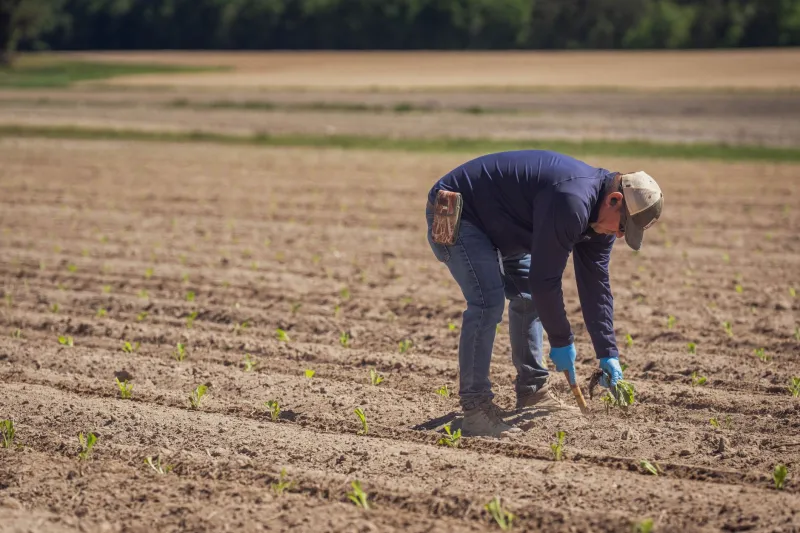
Let's be honest: soil carbon testing sounds like it should be straightforward. You pull some dirt, send it to a lab, and get a number back. Done, right?
Not even close.
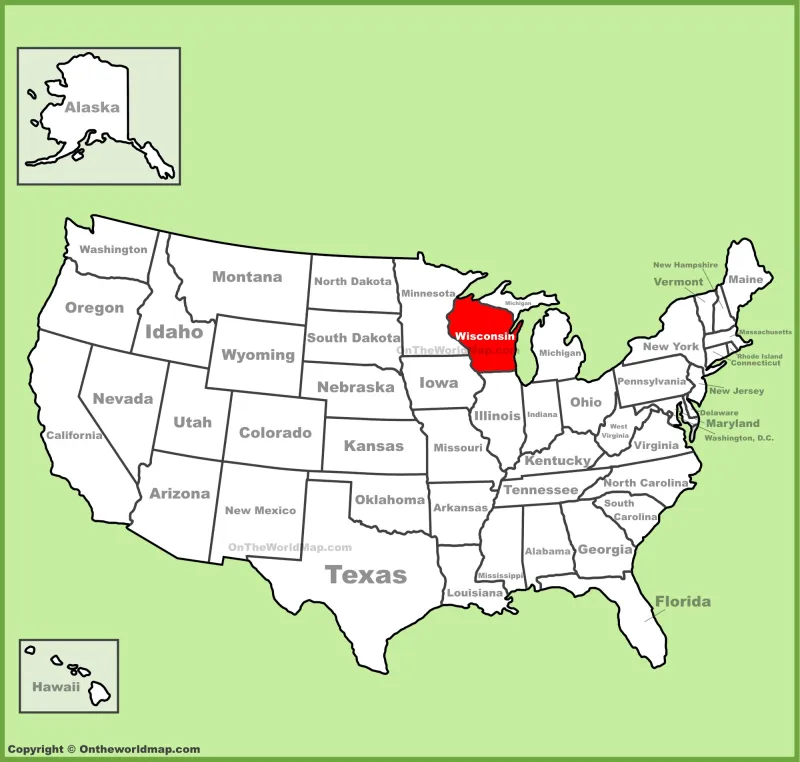
For Wisconsin farmers eyeing carbon markets — or those already enrolled in a program — the method behind that number matters enormously. Different testing approaches can produce wildly different results on the same soil. And if you're relying on do-it-yourself sampling without understanding the variables at play, you could be leaving thousands of dollars unclaimed, or worse, reporting carbon gains that don't hold up to third-party scrutiny.
This isn't about scaring you away from carbon markets. It's about making sure you go in with your eyes open.
Why "Soil Carbon Testing" Isn't One Thing
When most people talk about measuring soil organic carbon (SOC), they're actually referring to several distinct analytical methods — and they don't all tell the same story.
Loss on Ignition (LOI) is one of the oldest and most affordable approaches. You burn a dried soil sample and measure what's lost. It's cheap, widely available, and fine for general fertility management. But for carbon credit verification? It tends to overestimate organic carbon because it also burns off other compounds, including some minerals. That inflated number might look great on paper, but it won't survive scrutiny from a rigorous carbon registry.
Dry Combustion (also called elemental analysis) is the gold standard for most carbon markets. It uses high heat and measures the CO₂ released directly from the organic fraction of your soil. It's more expensive — often $25 to $60 per sample depending on the lab — but the accuracy is significantly higher, and most credible carbon programs require it.
Mid-Infrared Spectroscopy (MIR) is the newer kid on the block, and it's worth paying attention to. Labs like Precision Ag Services and Ward Laboratories are increasingly using MIR as a cost-effective screening tool that can be calibrated against dry combustion results. It's faster and cheaper at scale, which matters if you're sampling across multiple fields. Some carbon programs are starting to accept MIR data, but not all. Check your contract language carefully.
The takeaway: before you pull a single core, find out which method your carbon program requires. Using LOI data to satisfy a dry combustion requirement isn't just imprecise — it can void your credits entirely.
The DIY Sampling Problem Nobody Talks About
Here in Wisconsin, we're a proud, self-sufficient bunch. If something can be done ourselves, we'll figure it out. And in plenty of farming contexts, DIY soil sampling makes total sense.
But for carbon accounting, the sampling protocol itself is where things get complicated — fast.
Carbon content in soil isn't uniform. It varies by depth, by field zone, by compaction history, by where you pull your cores relative to crop rows, and even by the time of year you sample. Studies have shown that sampling variability alone can account for differences of 0.2 to 0.5% soil organic carbon — a range that, depending on your acreage and carbon price, could translate to thousands of dollars in credit value.
Common DIY mistakes that skew your numbers include:
- Inconsistent sampling depth. Most carbon programs require samples taken to at least 30 centimeters (about 12 inches), often in multiple depth increments. Sampling only the top 6 inches misses significant carbon stores and doesn't meet program standards.
- Sampling at the wrong time. Soil carbon fluctuates seasonally. Sampling right after a heavy rain or immediately post-harvest can produce readings that don't represent your baseline accurately.
- Ignoring bulk density. This is the big one. Carbon percentage alone doesn't tell you how much carbon is actually stored in a given volume of soil. You need bulk density measurements to calculate carbon stocks per acre. Skip this step and your numbers are essentially meaningless for credit purposes.
- Composite sampling without spatial strategy. Grabbing cores randomly and mixing them together works fine for fertilizer recommendations, but carbon markets increasingly want spatially explicit data — meaning they want to know where on the farm the carbon is concentrated, not just the average across the whole operation.
So Is Third-Party Verification Worth It?
This is the question we hear most often, and the honest answer is: it depends on your goals.
If you're enrolled in — or seriously considering — a formal carbon credit program, third-party verification is almost certainly worth the investment. Programs like Indigo Ag, Truterra, Nori, and the American Carbon Registry all have verification requirements built into their protocols. Some of them cover verification costs as part of the enrollment package. Others pass those costs to you.
For a mid-sized Wisconsin operation — say, 500 acres of cropland — professional sampling and verification might run $2,000 to $5,000 upfront. That sounds steep until you realize that a 0.3% difference in measured carbon across 500 acres, at current carbon prices of $15 to $30 per metric ton, could represent a $6,000 to $12,000 swing in credit value. The math starts to look different pretty quickly.
If you're not in a formal carbon market — if you're simply trying to track your soil health progress over time — then a rigorous DIY protocol with dry combustion lab analysis and consistent depth sampling is probably sufficient. The key word is consistent. Whatever method you use, use it the same way every time, in the same locations, at the same time of year. Trends matter as much as absolute numbers.
Building Your Pre-Season Carbon Audit
Before you do anything else, here's a practical framework for getting your carbon testing house in order:
-
Review your carbon program's protocol document. Every credible program publishes its sampling and analytical requirements. Read it. If you can't find it, ask — and if they won't share it, that's a red flag.
-
Map your fields for sampling zones. Use existing soil survey data (Web Soil Survey is free and excellent) to identify distinct soil types within your operation. Each major soil type should be treated as its own sampling unit.
-
Invest in bulk density measurements. Your extension office or local NRCS office may be able to help with this. It's not glamorous science, but it's non-negotiable for accurate carbon stock calculations.
-
Choose a lab that's certified and consistent. In Wisconsin, the University of Wisconsin Soil and Forage Lab and Midwest Laboratories are both well-regarded. Ask specifically whether they use dry combustion for organic carbon, and whether they participate in any inter-laboratory proficiency programs.
-
Document everything. GPS coordinates for every sampling point, photos of depth increments, lab chain-of-custody records. If you ever face a verification audit, this documentation is your protection.
The Bottom Line
Soil carbon markets are maturing fast, and the farmers who understand the science behind the numbers — not just the marketing pitch — are the ones who'll benefit most. Wisconsin soils have real carbon sequestration potential, especially on operations that have been building organic matter through cover crops, reduced tillage, and diverse rotations.
But potential only converts to profit when the measurement is done right.
Don't let a flawed sampling protocol or the wrong lab method undercut years of good land stewardship. Do the audit. Understand your numbers. And if you're not sure where to start, your county's UW-Extension ag agent or your local NRCS office can point you toward resources that won't cost you a dime.
Your soil has been doing the work. Make sure you're measuring it in a way that actually gives it — and you — the credit it deserves.