Roots, Resilience, and Revolution: How Wisconsin's Women Farmers Are Rewriting the Rules of Soil Health
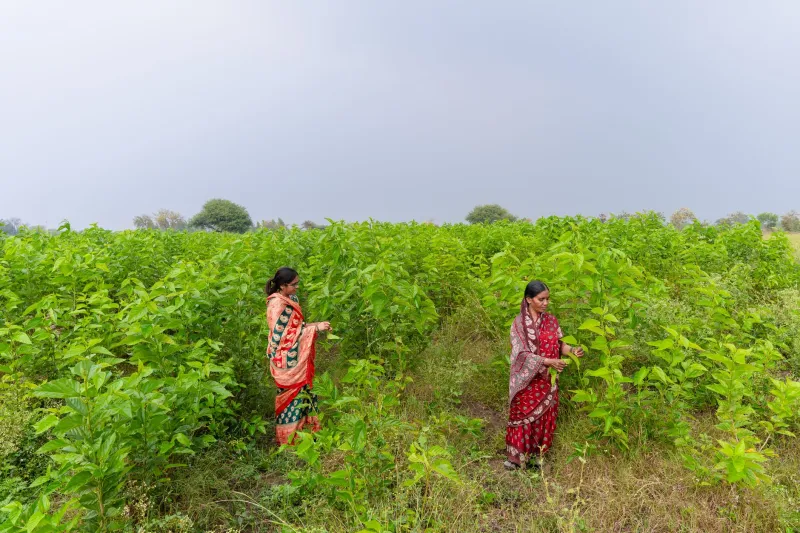
There's a moment that Rachel Krause, a fourth-generation farmer near Viroqua, describes as the turning point. She'd just gotten back her soil test results — organic matter up nearly a full percentage point in three years — and her first instinct wasn't to call her input dealer. She called her neighbor, Maria.
"We just started talking," Rachel says. "And then Maria called Denise, and Denise called someone else, and before we knew it we had eight women sitting around a kitchen table talking about earthworm counts."
That kitchen table conversation has since grown into a formal learning circle with over 30 members. And it's not an isolated story.
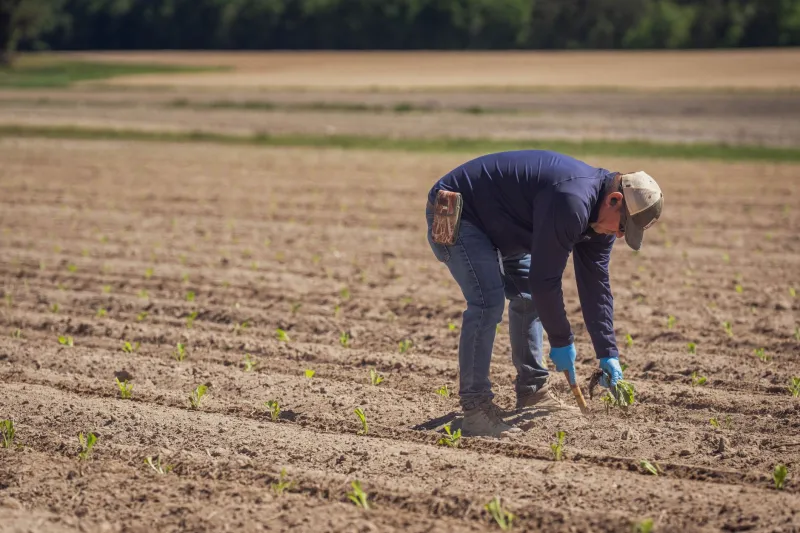
Across Wisconsin, women farmers, agronomists, and soil scientists are building networks that look less like traditional agricultural extension and more like something entirely new — community-rooted, science-forward, and deeply invested in the long game of soil health. They're not just adopting regenerative practices. In many cases, they're designing them.
The Numbers Don't Lie — But They Don't Tell the Whole Story Either
Women now operate or co-operate roughly a third of Wisconsin farms, according to USDA census data. That number has grown steadily over the past two decades, and the farms women lead skew toward diversified operations, direct marketing, and — critically — practices associated with regenerative agriculture.
That correlation isn't accidental, says Dr. Amara Osei, a soil scientist at UW-Madison Extension who works closely with women-led operations across the state.
"There's a pattern I keep seeing," she says. "Women farmers tend to ask 'why' more. They want to understand the mechanism, not just the recommendation. That makes them really good at adapting practices to their specific soil conditions instead of just following a recipe."
That curiosity, she argues, is exactly what soil health demands. Regenerative agriculture isn't a checklist. It's a relationship with a living system — one that changes by the acre, by the season, and by the decade. Farmers who thrive in that environment are ones who pay attention, iterate, and share what they learn.
Barriers That Shouldn't Still Exist — But Do
It would be dishonest to talk about this movement without naming the headwinds.
Access to land remains a serious structural barrier. Women are less likely to inherit farmland and face more skepticism from lenders when seeking operating loans. Historically, agricultural extension services were built around a male-farmer default, and while that's changing, the culture of some county offices hasn't fully caught up.
"I've had agronomists talk past me to my husband at field days," says Denise Hartmann, who manages a 200-acre diversified operation near Fond du Lac. "He doesn't even do the soil work. I do. But the assumption is still there."
Those experiences, frustrating as they are, have pushed many women to build their own knowledge infrastructure — and that's where the real innovation is happening.
Learning Circles as a Model for the Future
The learning circle model that Rachel's group pioneered isn't just a social outlet. It's a structured knowledge-sharing system. Members rotate hosting duties, bring specific data from their fields — soil respiration numbers, infiltration rates, cover crop biomass weights — and work through problems collaboratively.
"We're essentially doing our own on-farm research," Rachel explains. "And because we're all in different soil types across the county, we can actually compare results in a meaningful way."
Dr. Osei has started formally studying these groups, and early findings suggest they outperform traditional extension models on adoption of complex soil health practices. The reason, she thinks, is psychological as much as practical.
"When you learn something from someone who farms land like yours, someone you trust, someone who's sitting across from you — it lands differently than a fact sheet," she says.
Several of these circles have also become incubators for young women entering agriculture. Mentorship happens organically, and the knowledge that gets passed down isn't just technical — it's about navigating the social and financial landscape of farming as a woman.
Soil Stewardship as a Long-Term Value System
Ask women farmers why they prioritize soil health, and the answers tend to reach further into the future than typical economic ROI conversations.
"I think about my granddaughter," says Maria Schultz, who farms near Richland Center and has been no-till for over a decade. "I want her to have something to work with. That's not sentiment — that's strategy."
That intergenerational framing shows up consistently. And it maps closely to the core logic of regenerative agriculture: that short-term extraction always costs more than it saves, that the soil is a balance sheet that runs across generations, not quarters.
Women farmers aren't the only ones who think this way, of course. But researchers who study farm decision-making note that women-led operations are statistically more likely to prioritize long-term land health over short-term yield maximization — even when it costs them in the near term.
What Extension Services Are Finally Starting to Get Right
The good news is that formal agricultural institutions are beginning to catch up. UW-Madison Extension has launched several women-in-agriculture programming initiatives in recent years, and some county offices have made deliberate efforts to recruit female agronomists and create more inclusive field day environments.
But the women building these networks aren't waiting for institutions to lead.
"We're not asking permission," Denise says with a laugh. "We're just doing it."
And in doing it, they're demonstrating something important: that the future of Wisconsin's soil health may depend less on new technologies or policy incentives than on the kind of relational, collaborative, science-grounded culture these women are already building — one kitchen table at a time.
If you want to find your nearest women's farming learning circle or connect with women-led soil health initiatives in Wisconsin, start at your local NRCS office or reach out through Soil Sisters WI — because this network is growing, and there's always room at the table.